This pair of hand-sculpted ceramic book vases, called “Parts Work: Accepting Identity” acts as a literal and metaphorical vessel for human experience, exploring how psychological paradigms intersect with social identity and historical erasure.
In the smaller of the two volumes, the spine bears a subtle hint of the LGBTQ rainbow flag The physical scale of the piece is a deliberate nod to the burgeoning, newly emerging research surrounding LGBTQ social model approaches to identity and mental health. This smaller stature serves as a poignant monument to the massive amounts of institutional knowledge, history, and research lost during systemic attempts to erase LGBTQ identity, both historically in Nazi Germany and more recently during the Trump Administration. The reverse side features delicate, monochromatic floral impressions suggesting a quiet, resilient growth despite historical silencing.
In contrast the larger asserts its physical presence with the vibrant, distinct diagonal stripes of the Disability Pride flag glazed clearly across both sides. Its larger scale reflects the expansive, deeply entrenched history of medical and psychological research into disability and neurodiversity. This substantial volume represents the heavy, lasting impacts of the medical model of disability, a paradigm that has historically dominated clinical literature and institutional structures.
Viewed together the two vessels invites the viewer to question who holds the authority to document identity, whose history is preserved, and how the models we use to understand ourselves shape the space we are permitted to occupy. Functioning as actual vases, both pieces challenge us to consider what we choose to nurture and cultivate within the vessels of our communities, and how the social and medical models complement and interact with each other.


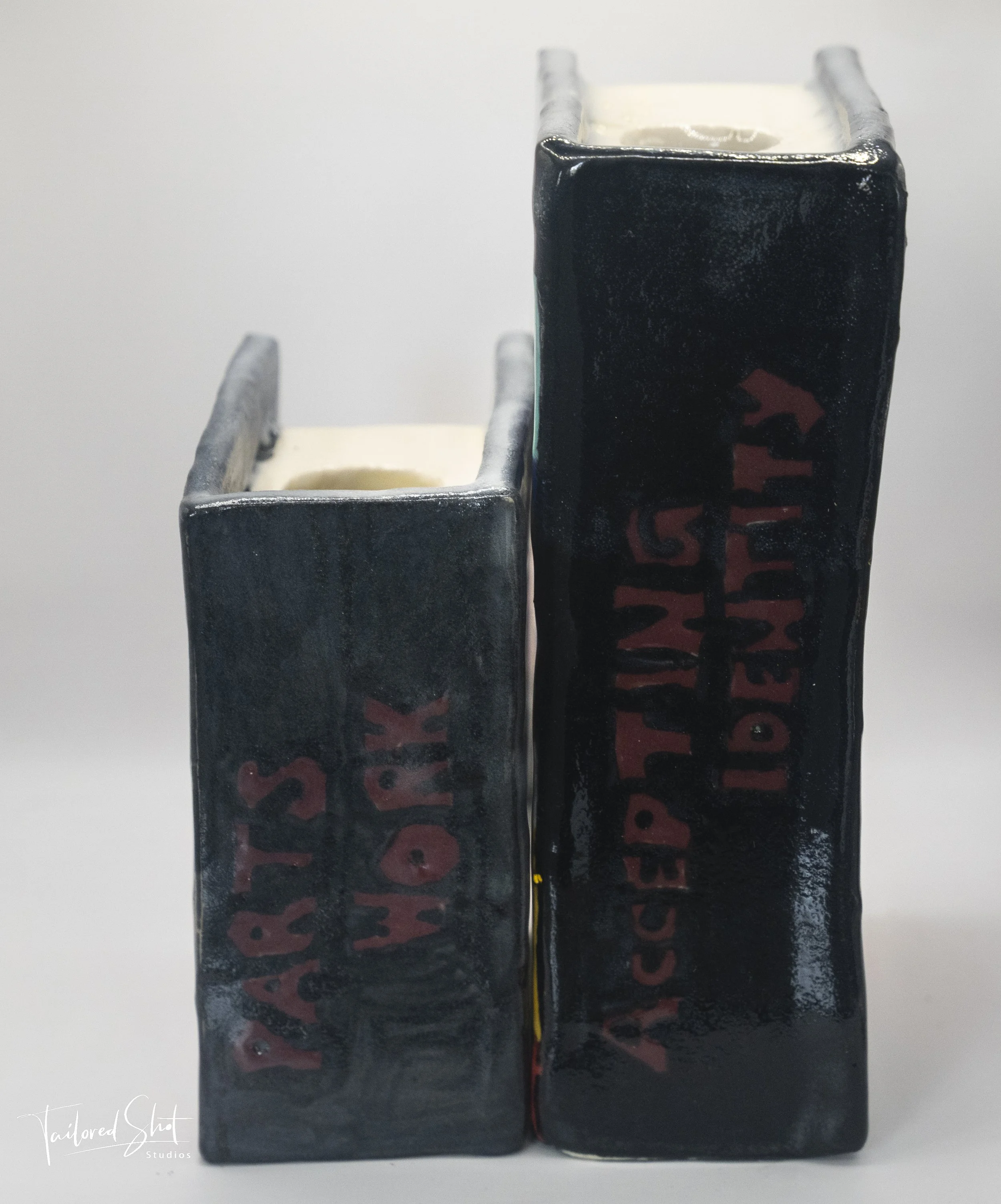 Image 1 of 7
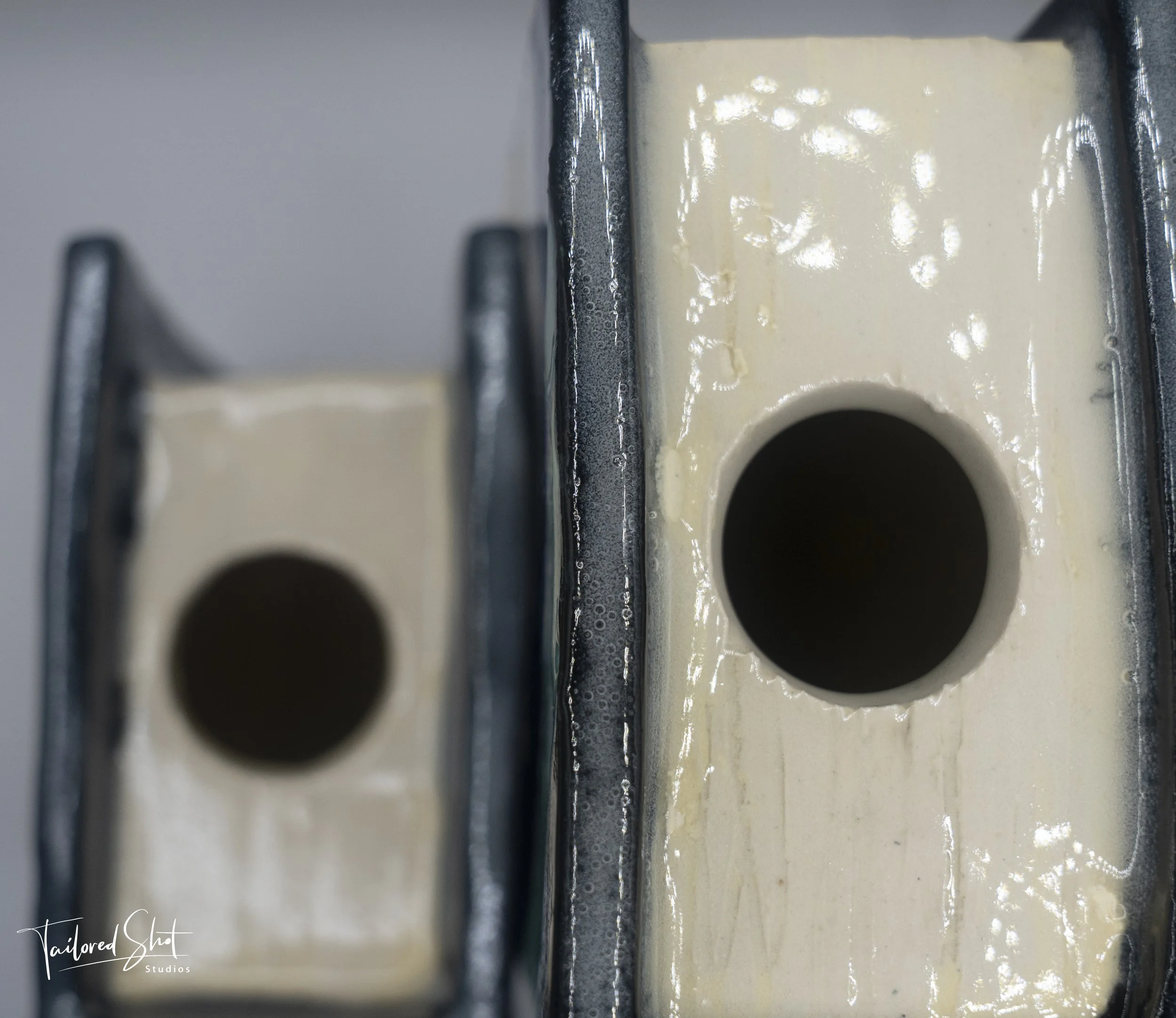 Image 2 of 7
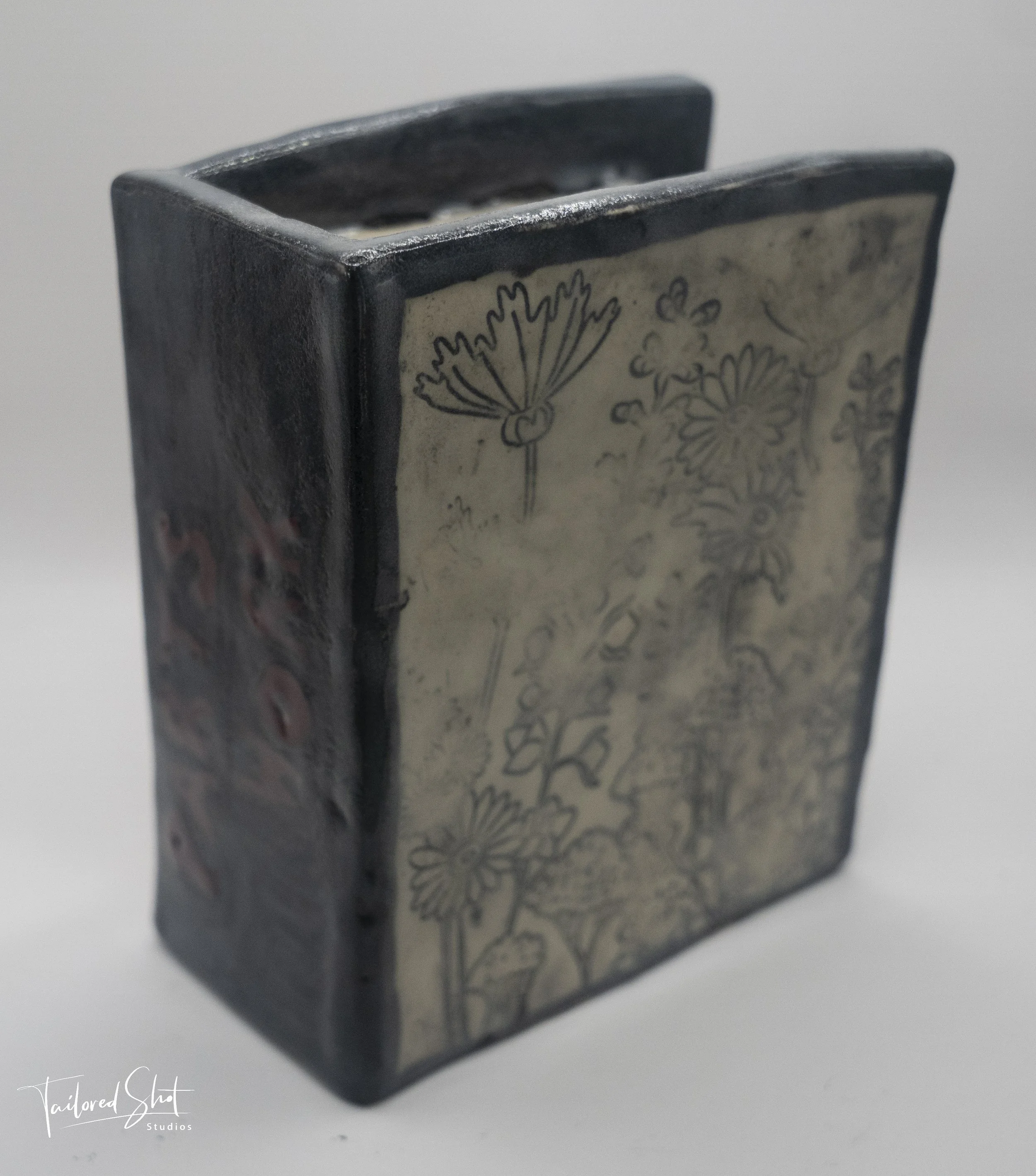 Image 3 of 7
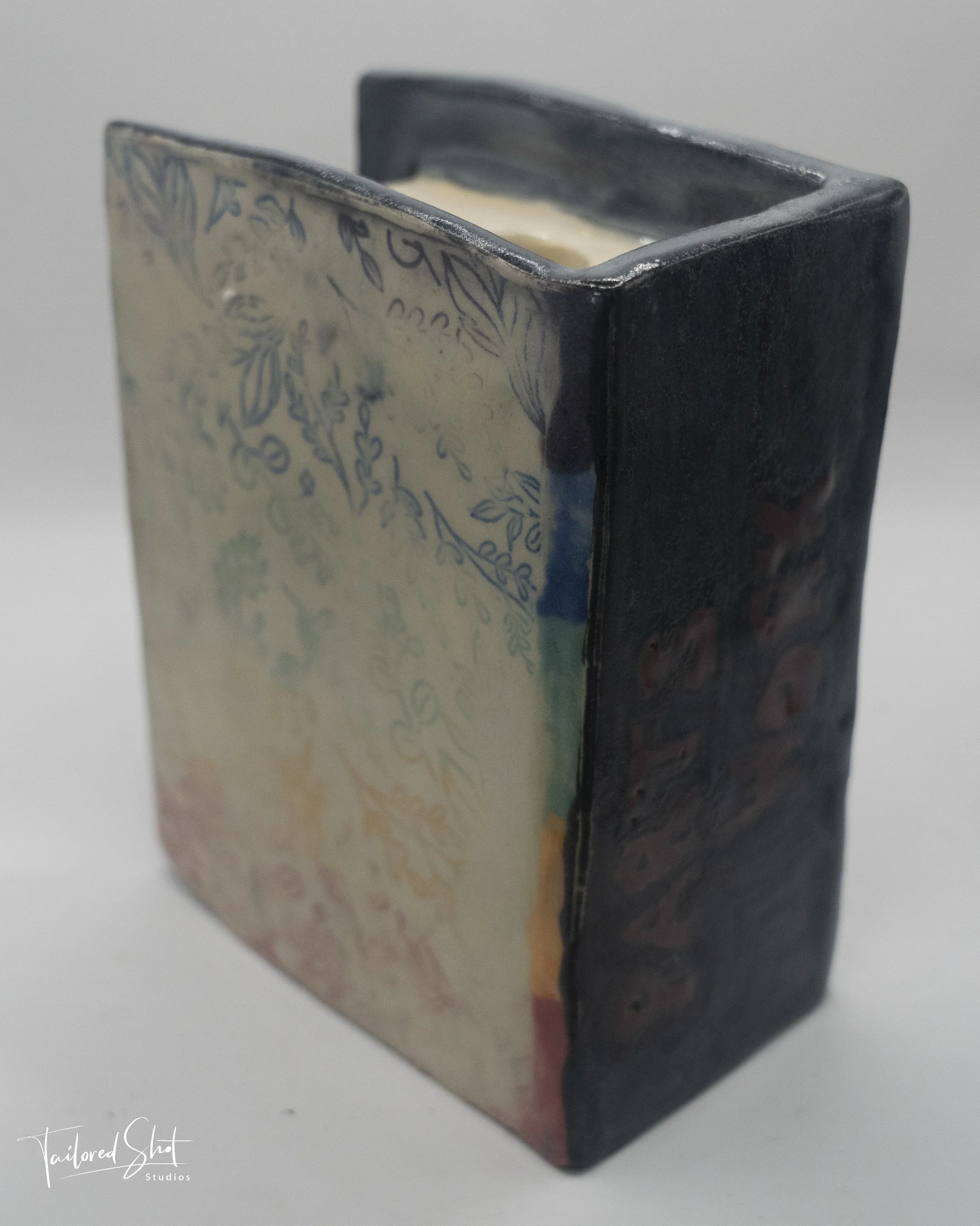 Image 4 of 7
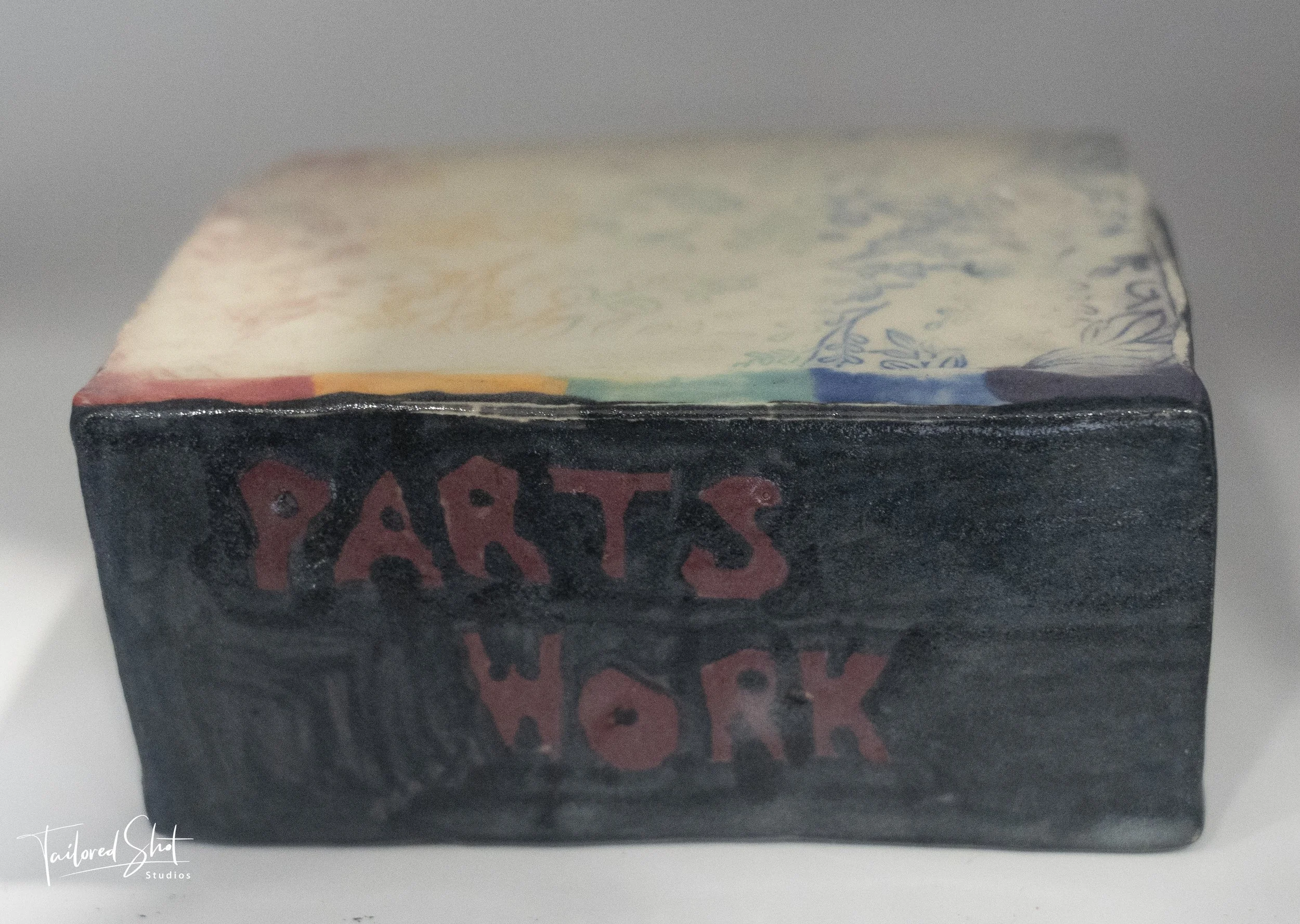 Image 5 of 7
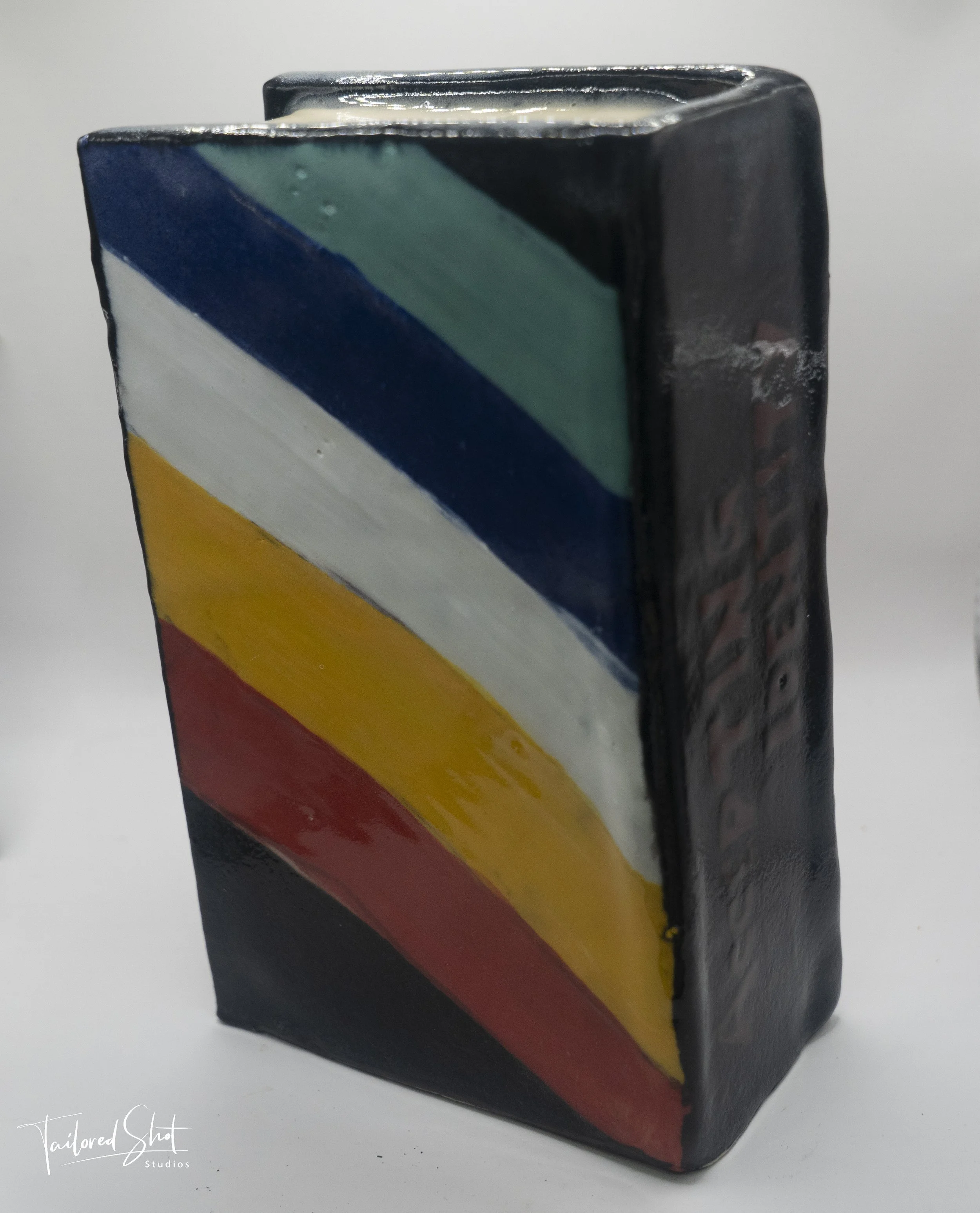 Image 6 of 7
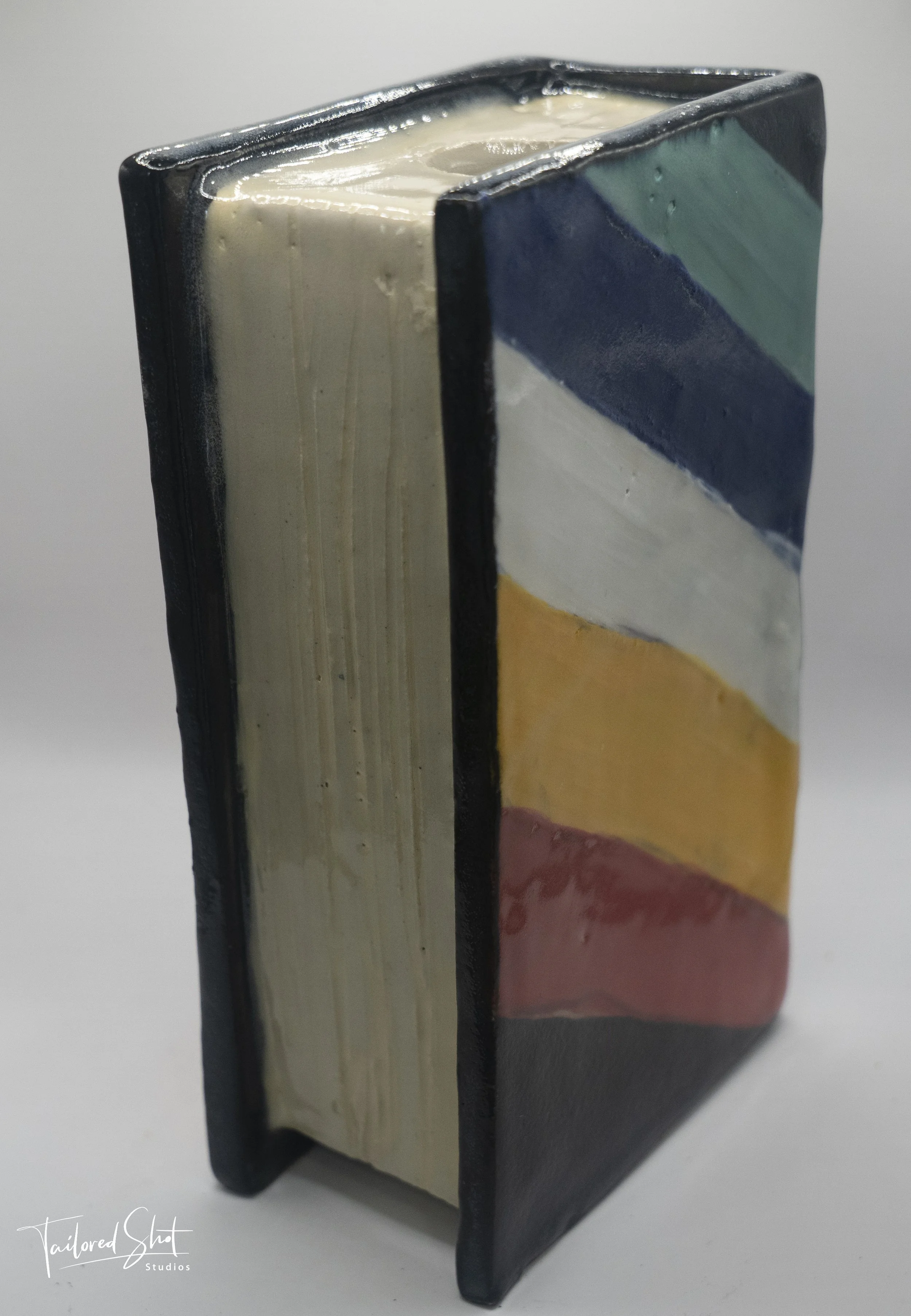 Image 7 of 7