

Sculptures
Generational Jackalopes #1
Jackalope #1
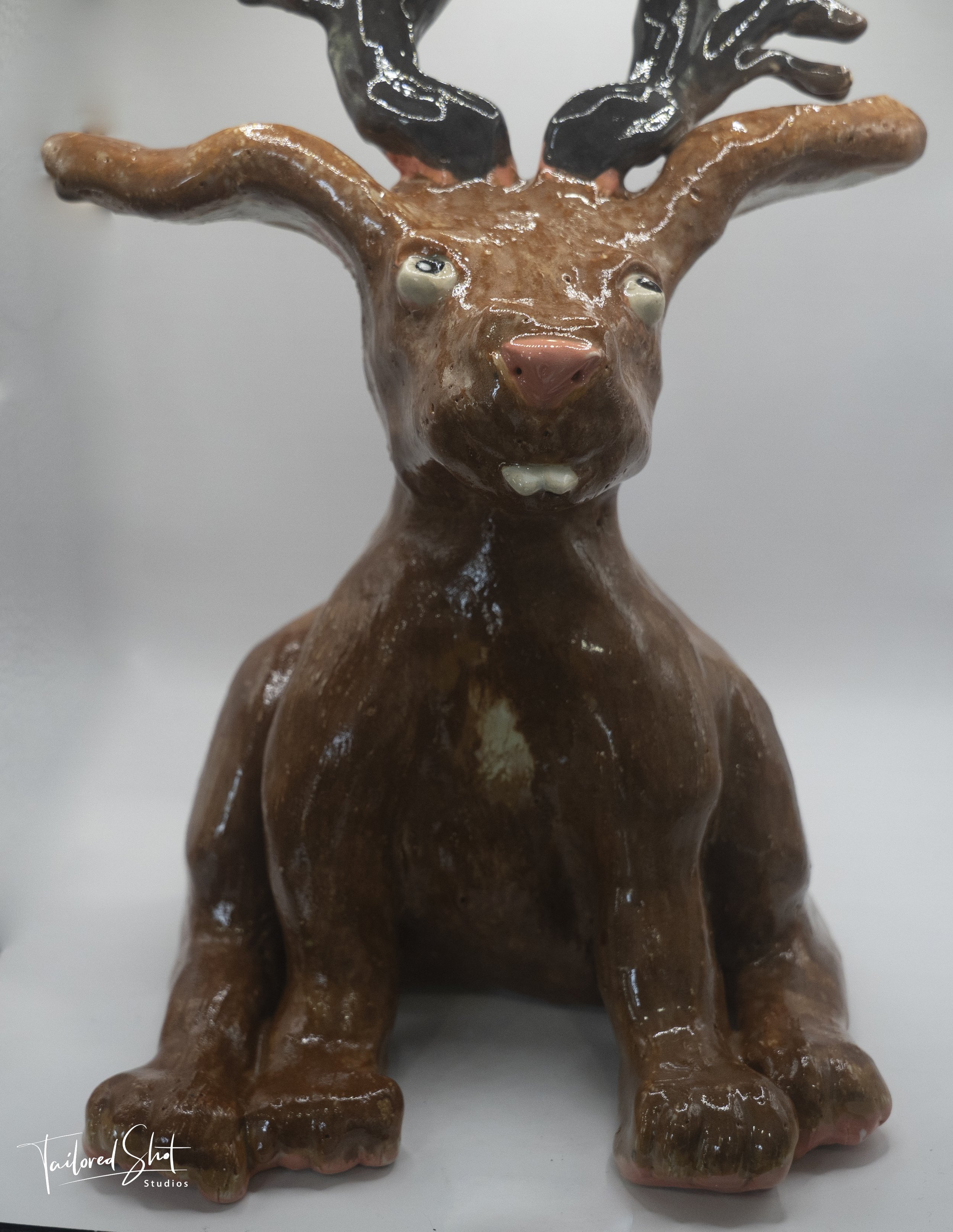
Jackalope #2
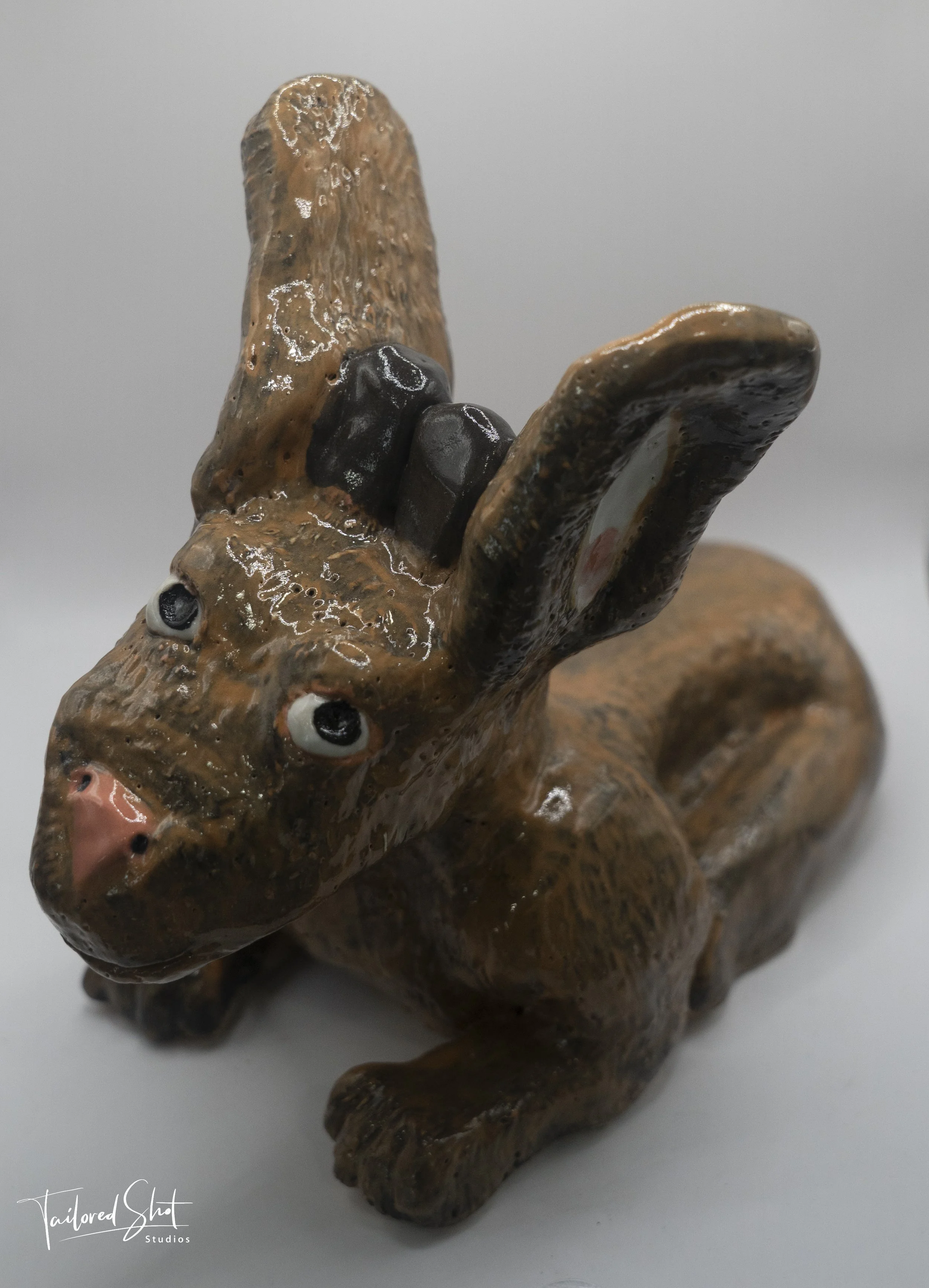
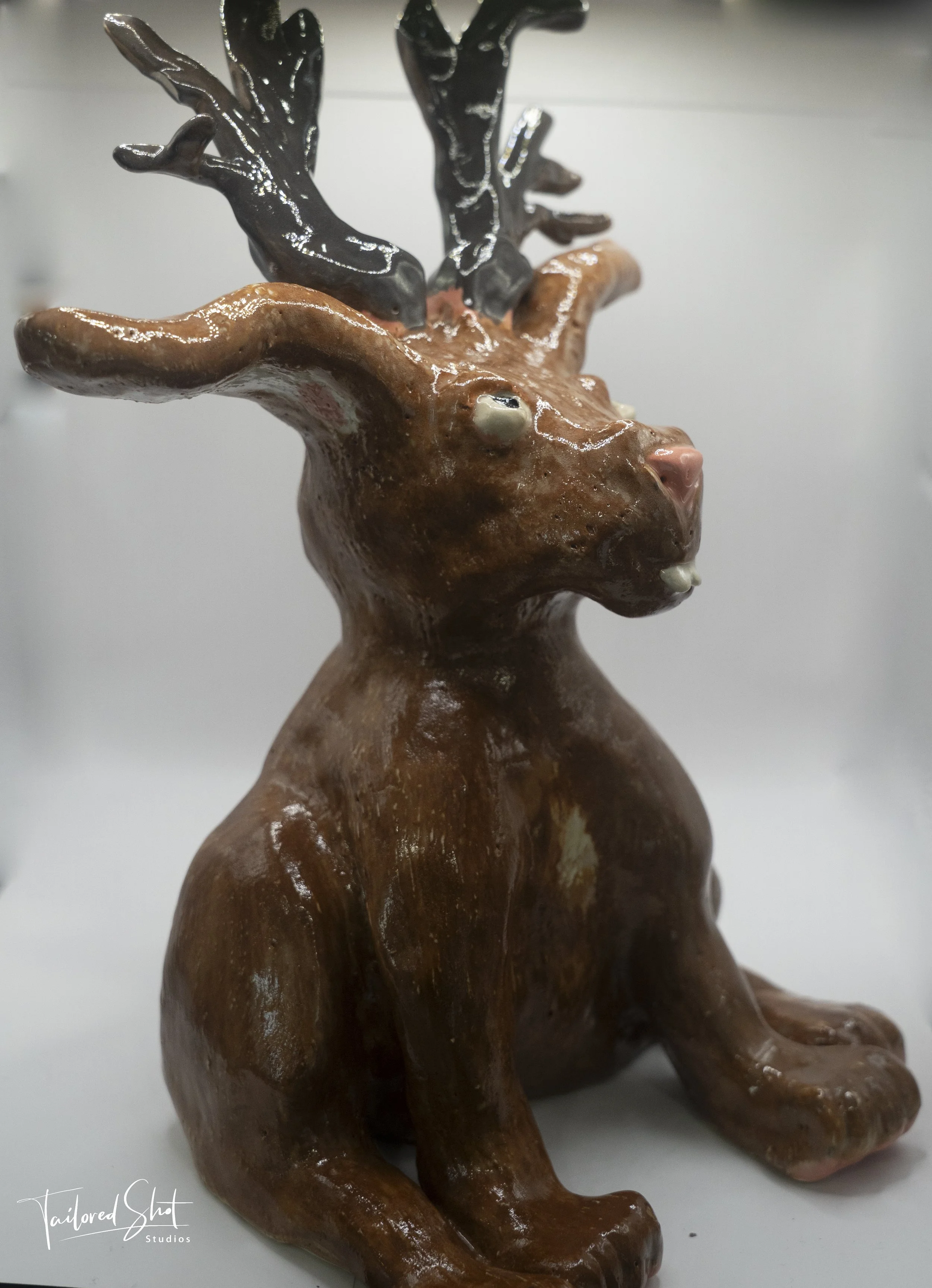
"Generational Jackalopes #1" serves as a powerful metaphor for the intergenerational experience of medical trauma and healing. By rendering the mythical jackalope with a tender, raw vulnerability, the artist captures a painful yet beautiful moment of recognition.
When the young jackalope looks upon the parent, it witnesses a path it will never fully walk. In her own experience, the artist, Kristin Schiff, has seen her mother left untreated for an auto-immune disease for 33 years. They were both diagnosed in 2023 after the artist spent 7 years advocating in the medical system for that help. She chose a Jackalope as the symbol for auto-immune because they both experience this chronic condition in hidden or non-apparent ways that over time become visible. Choosing a mythical creature/cryptid is meant to connect hidden or non-apperant disability into something that can be seen, but is often treated as mythical by the medical community.
Parts Work: Accepting Identity Book Vases
Vases Together
Parts Work
Accepting Identity
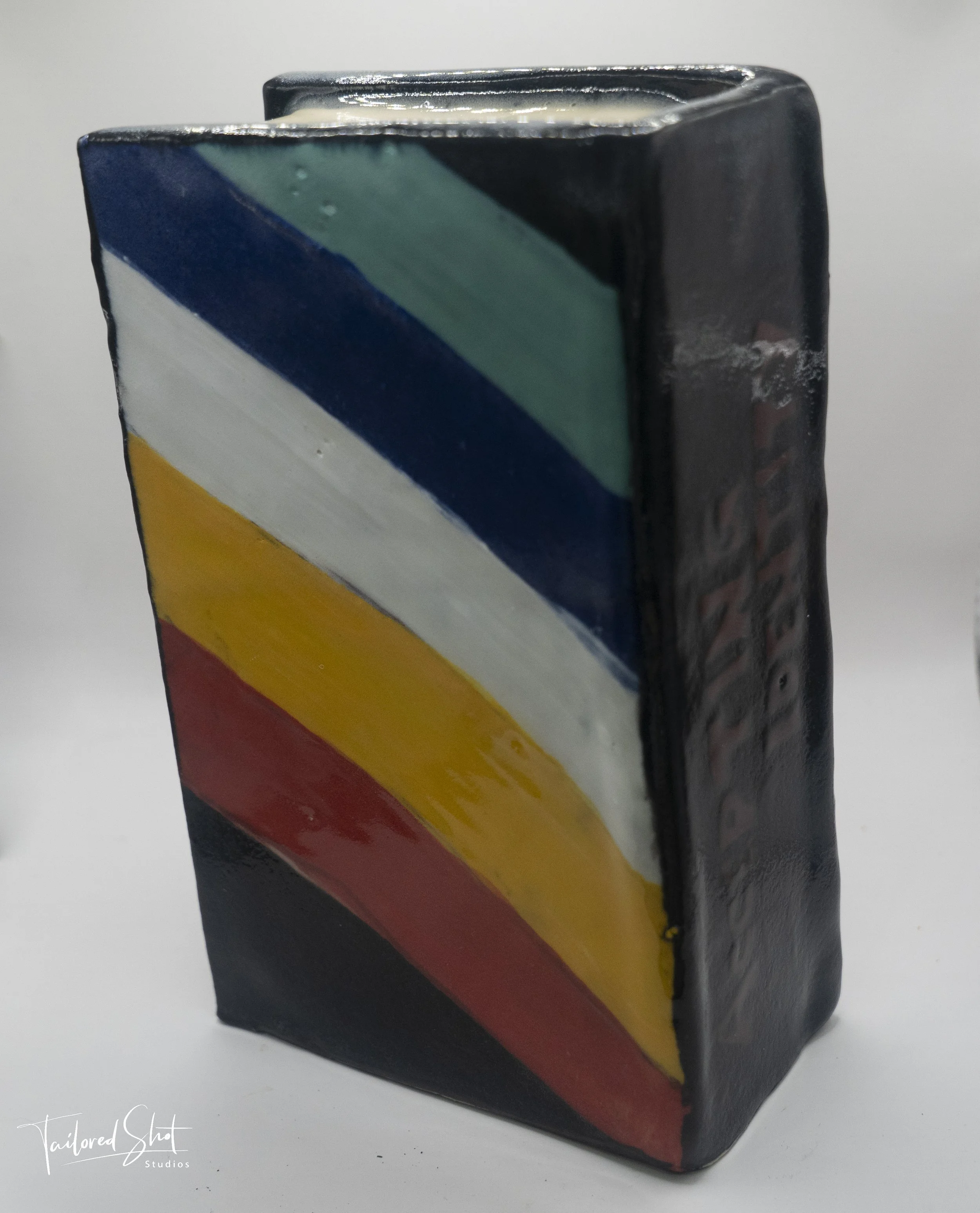
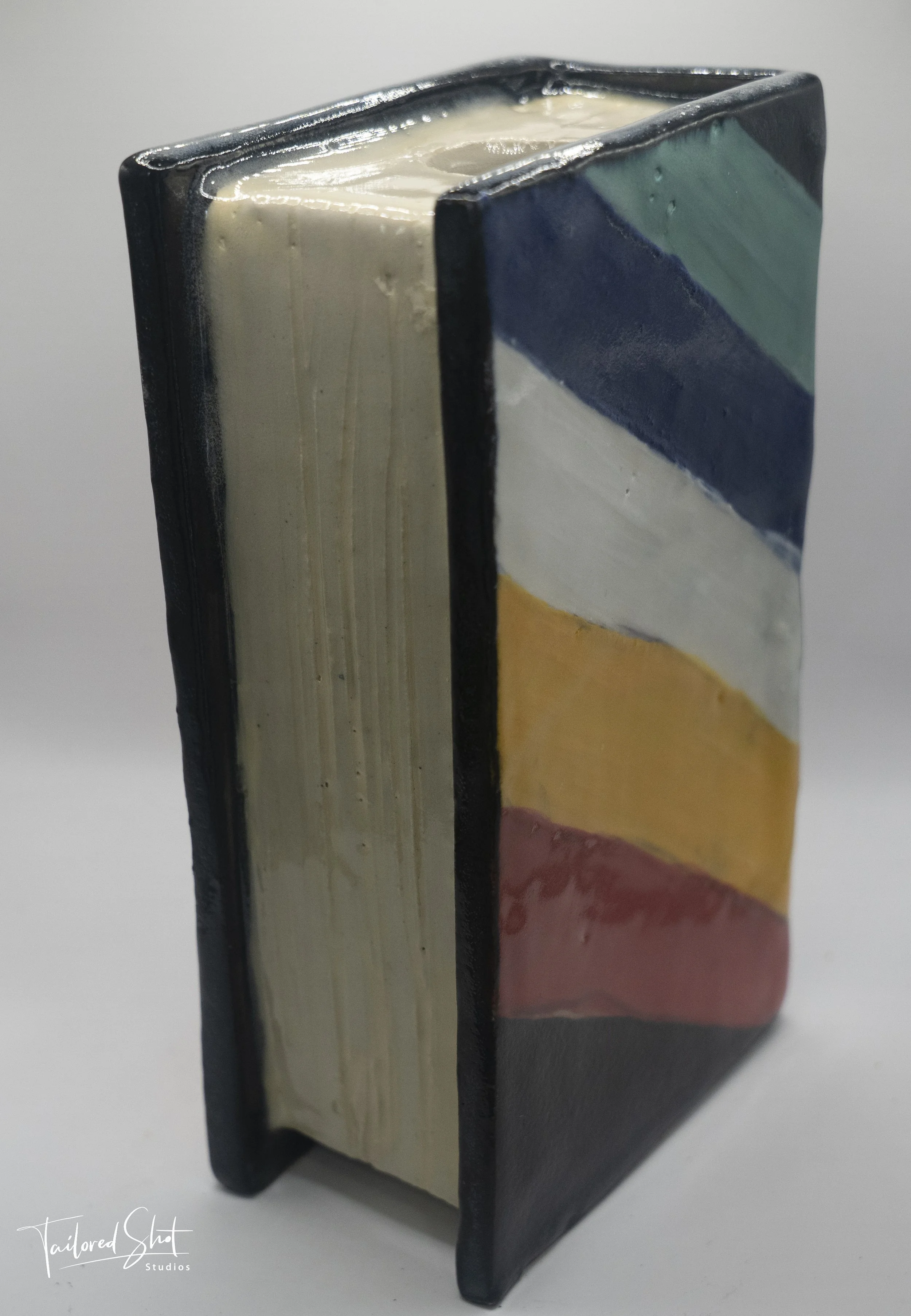
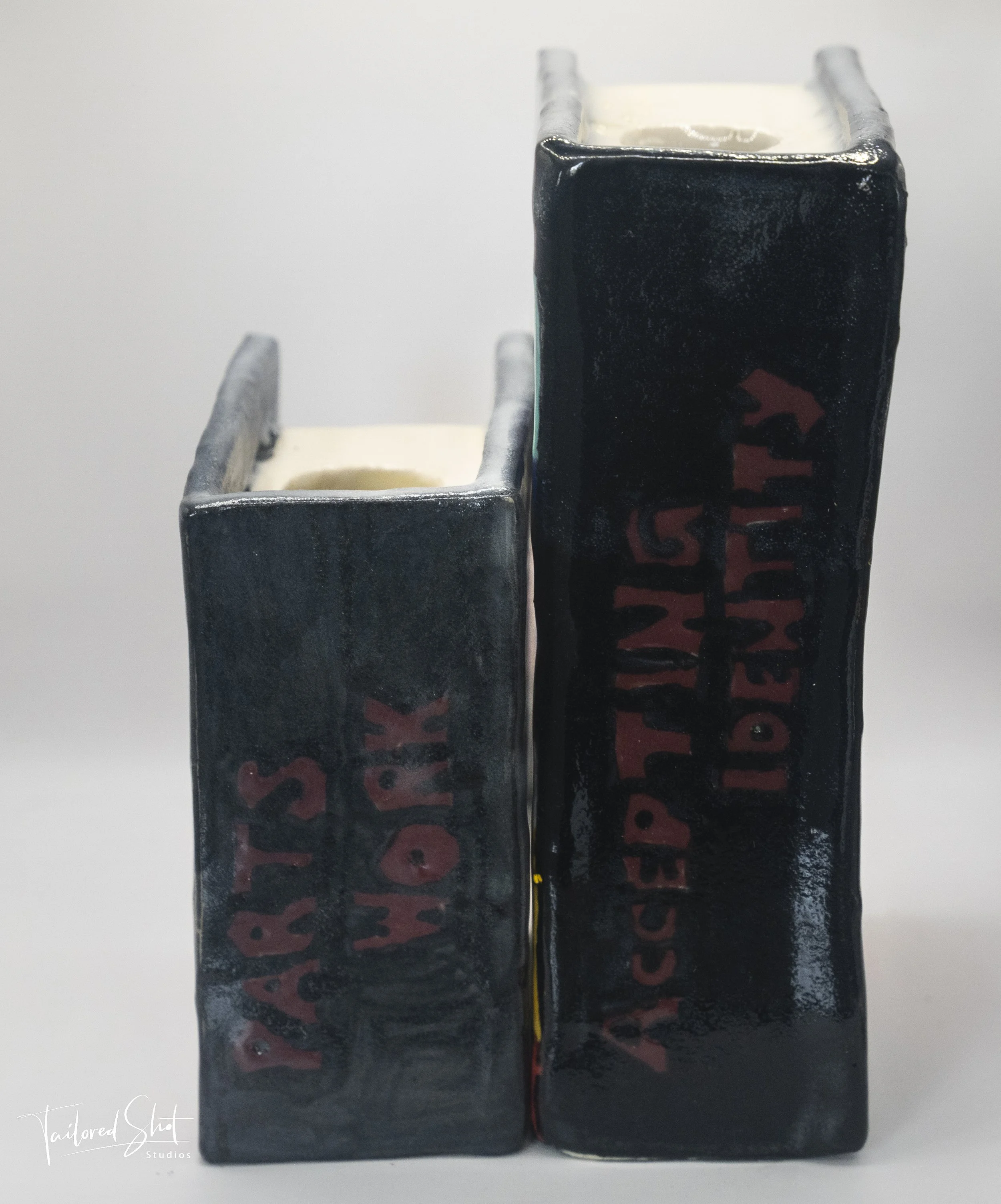
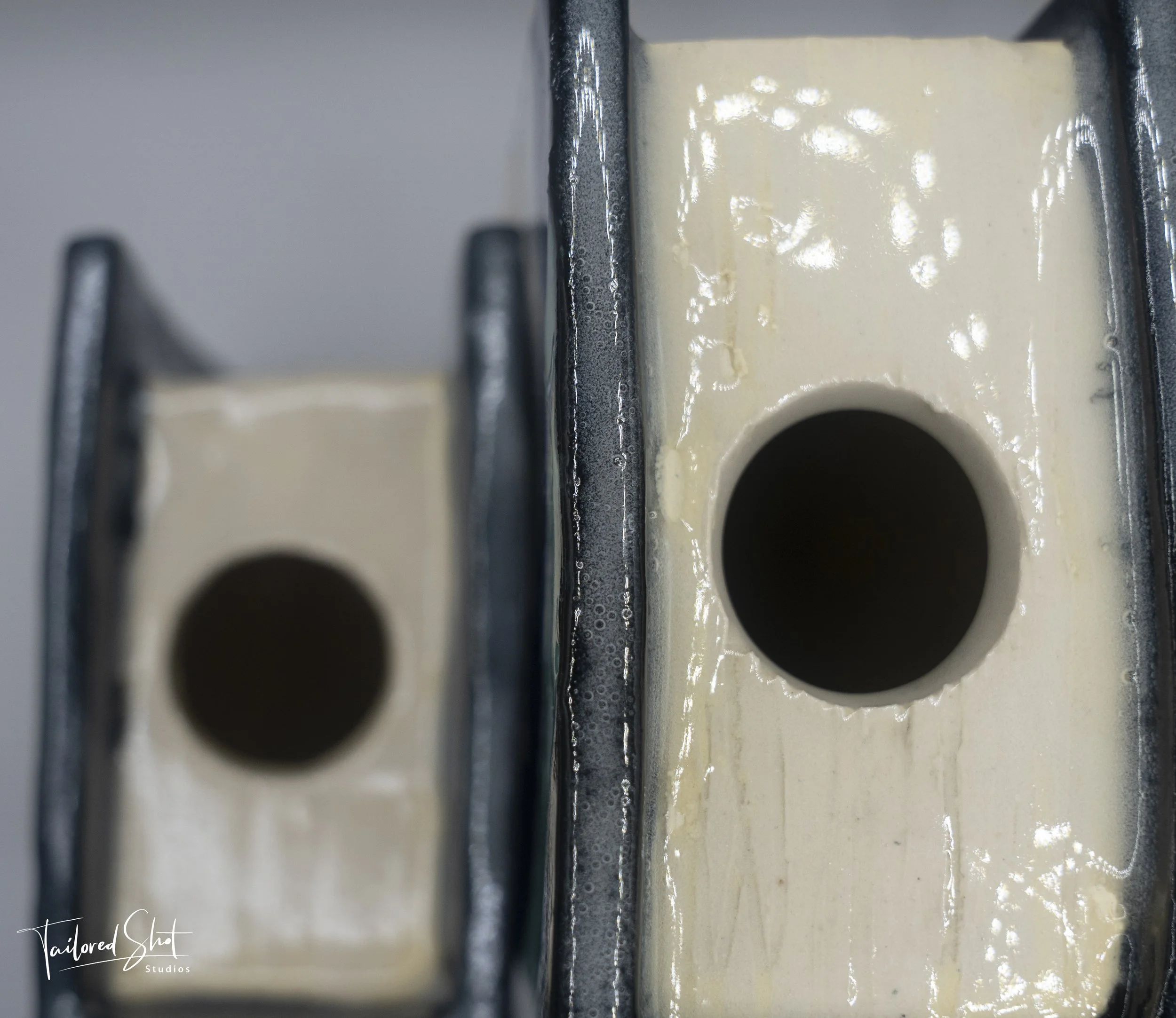
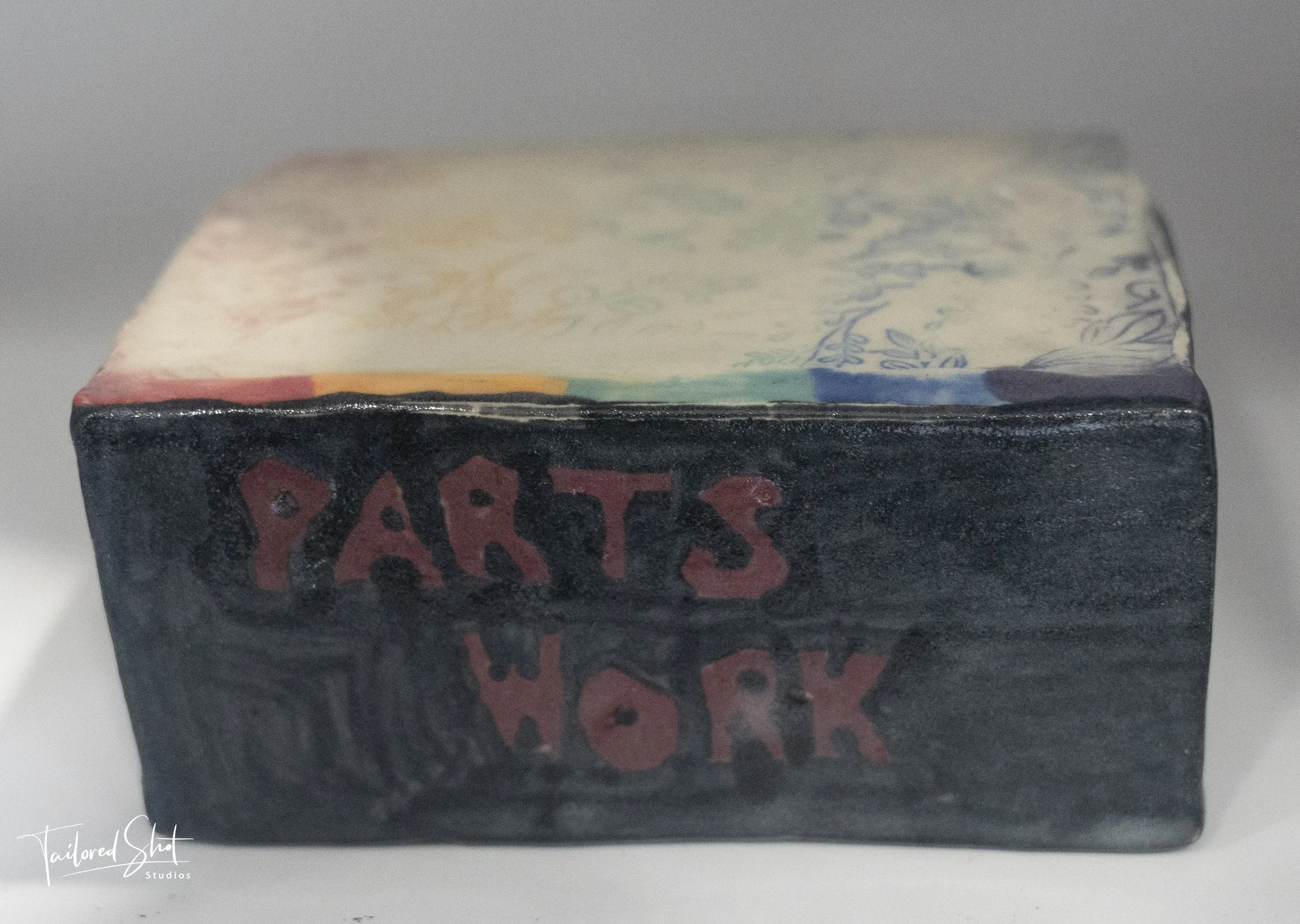
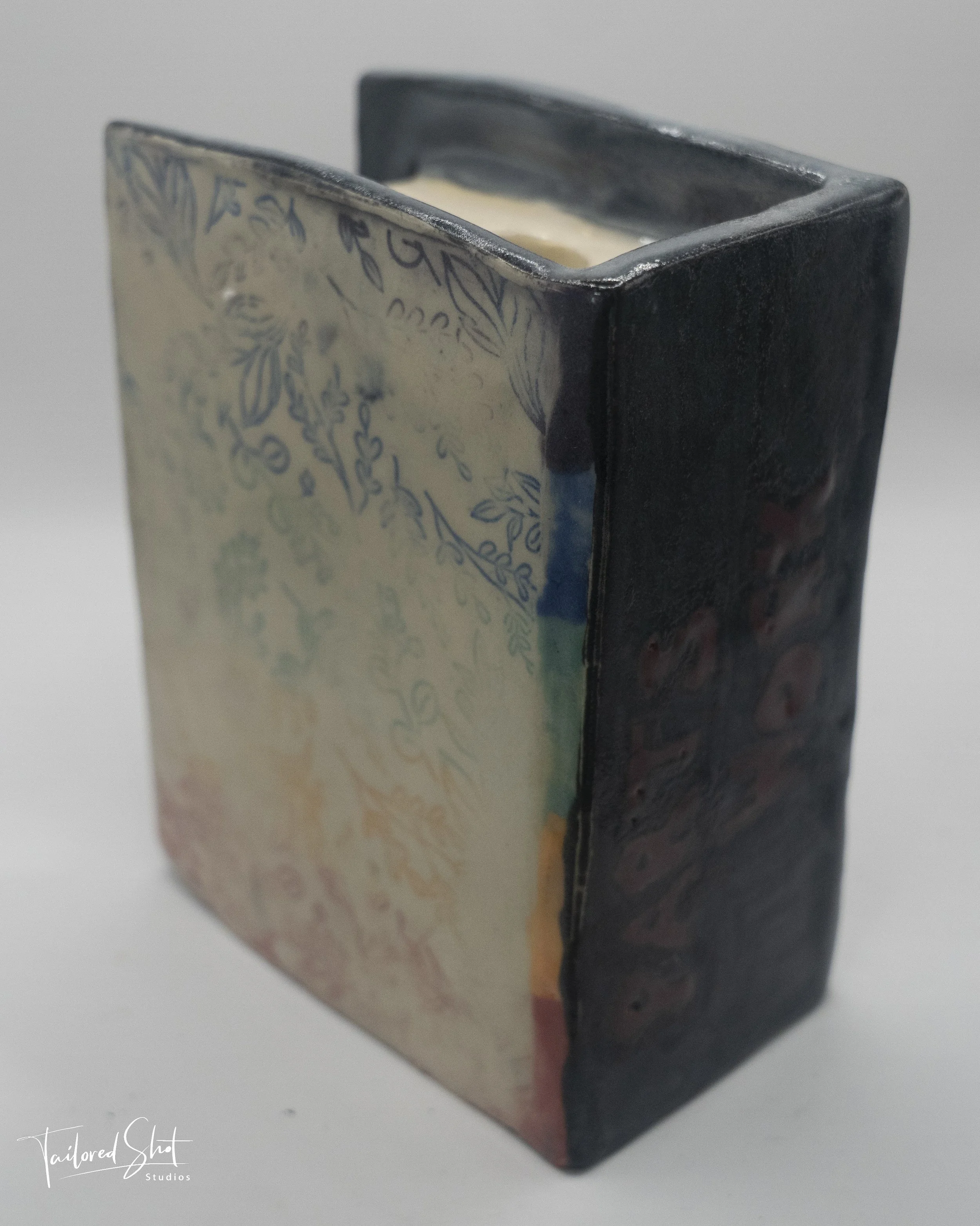
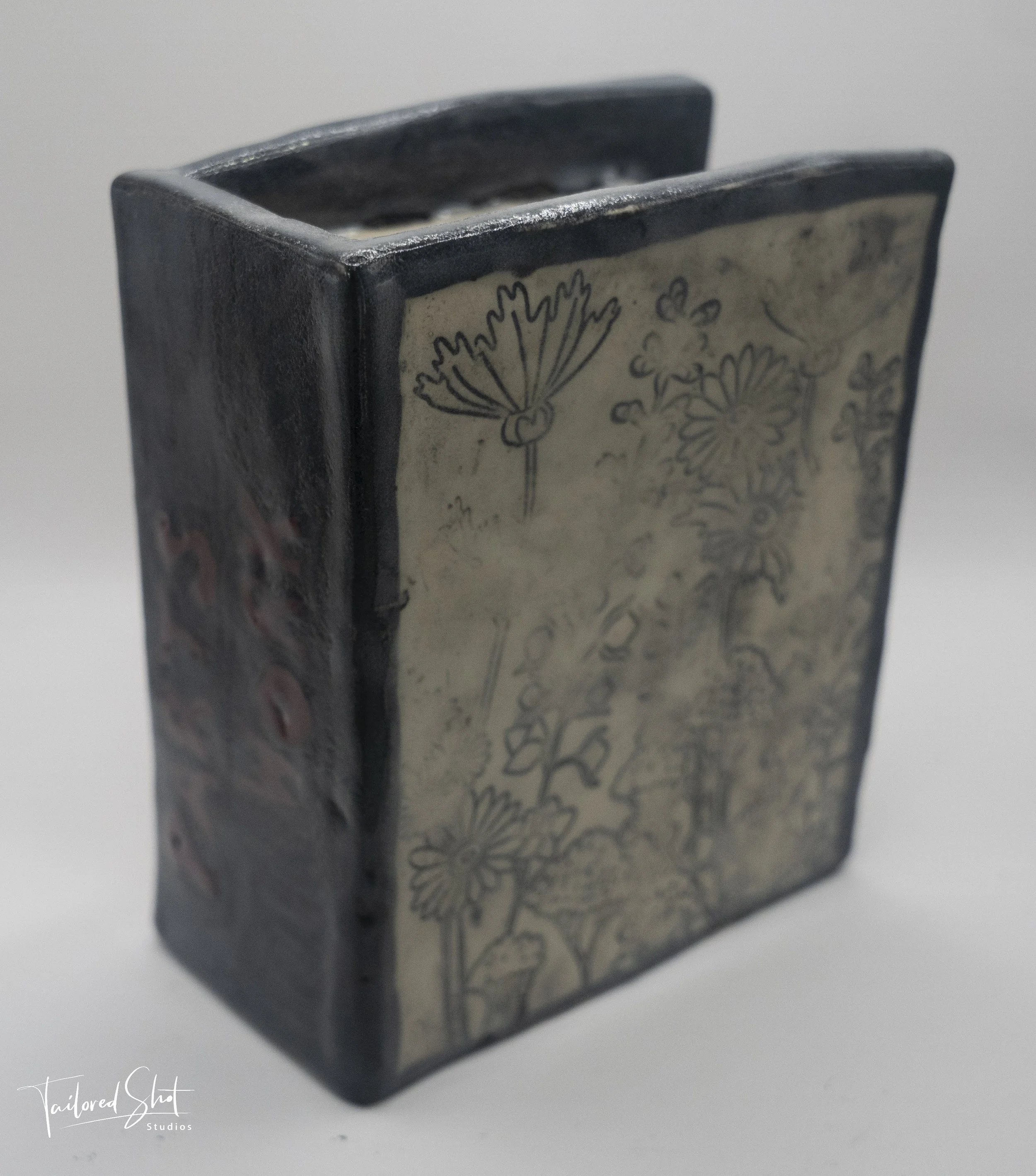
This pair of hand-sculpted ceramic book vases, called “Parts Work: Accepting Identity” acts as a literal and metaphorical vessel for human experience, exploring how psychological paradigms intersect with social identity and historical erasure.
In the smaller of the two volumes, the spine bears a subtle hint of the LGBTQ rainbow flag The physical scale of the piece is a deliberate nod to the burgeoning, newly emerging research surrounding LGBTQ social model approaches to identity and mental health. This smaller stature serves as a poignant monument to the massive amounts of institutional knowledge, history, and research lost during systemic attempts to erase LGBTQ identity, both historically in Nazi Germany and more recently during the Trump Administration. The reverse side features delicate, monochromatic floral impressions suggesting a quiet, resilient growth despite historical silencing.
In contrast the larger asserts its physical presence with the vibrant, distinct diagonal stripes of the Disability Pride flag glazed clearly across both sides. Its larger scale reflects the expansive, deeply entrenched history of medical and psychological research into disability and neurodiversity. This substantial volume represents the heavy, lasting impacts of the medical model of disability, a paradigm that has historically dominated clinical literature and institutional structures.
Viewed together the two vessels invites the viewer to question who holds the authority to document identity, whose history is preserved, and how the models we use to understand ourselves shape the space we are permitted to occupy. Functioning as actual vases, both pieces challenge us to consider what we choose to nurture and cultivate within the vessels of our communities, and how the social and medical models complement and interact with each other.
Tortuga Dulce #1
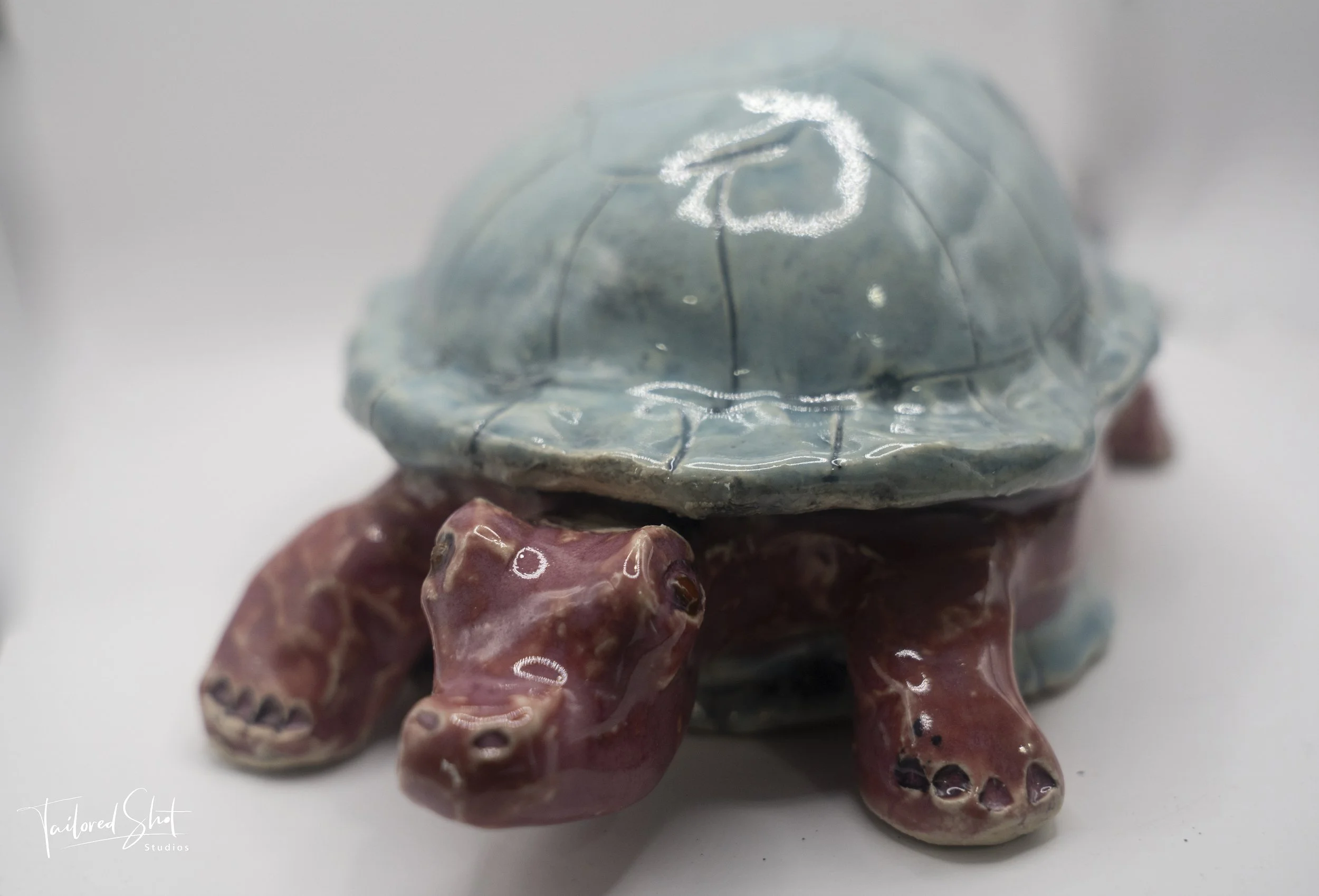
“Tortuga Dulce”, translated as "Sweet Turtle", takes its name from a lighthearted high school Spanish class nickname, but beneath the glossy, candy-coated surface lies a deeply personal exploration of trauma, protection, and somatic reclamation. For seven years, the artist lived encased in a rigid scoliosis brace. This sculpture serves as a physical manifestation of that lived experience. The turtle's heavy, protective shell reflects the literal and psychological shielding required to survive years of confinement that fostered body dysmorphia and forced a young mind to learn to live outside of the physical self.
The choice of glaze carries a deliberate tension. The pale blue shell and fleshy, mauve-pink limbs evoke a sickly sweetness reminiscent of artificial candy. This hyper-palatable exterior nods to the social performance of youth, the pressure to mask behind a pleasant, "sweet" demeanor, as a form of protection from bullying. This work is rooted in how the artist is learning to embrace all her parts through the principles of Internal Family Systems (IFS) and Parts Work. Tortuga Dulce represents an act of creative unlearning. It honors the protective "part" that built a hard shell to navigate trauma, while gently inviting the artist back into her own skin. By shaping the clay, the artist externalizes the armor she once wore, transforming a vessel of past confinement into a testament to healing, integration, and somatic homecoming.
The Honeyed Apple
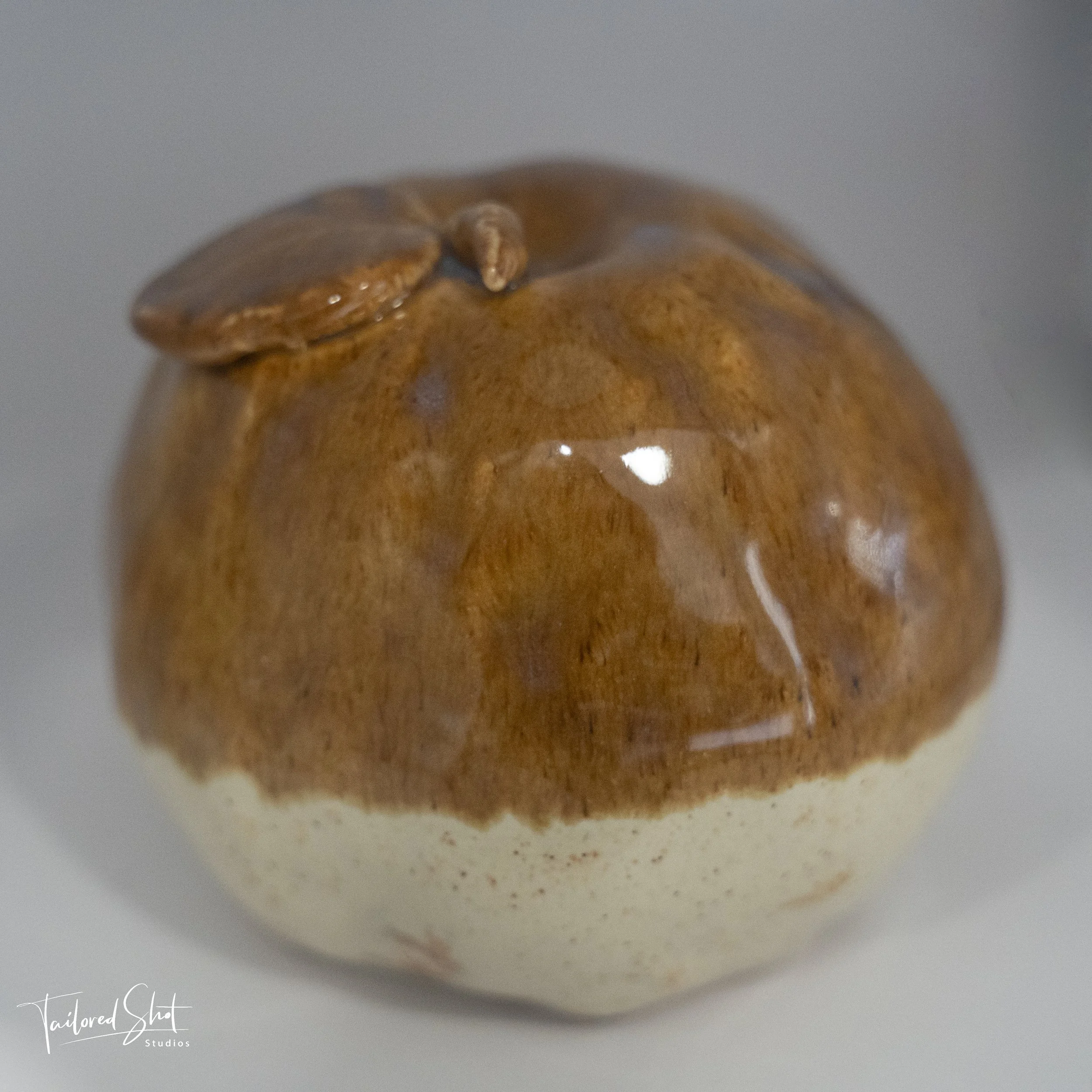
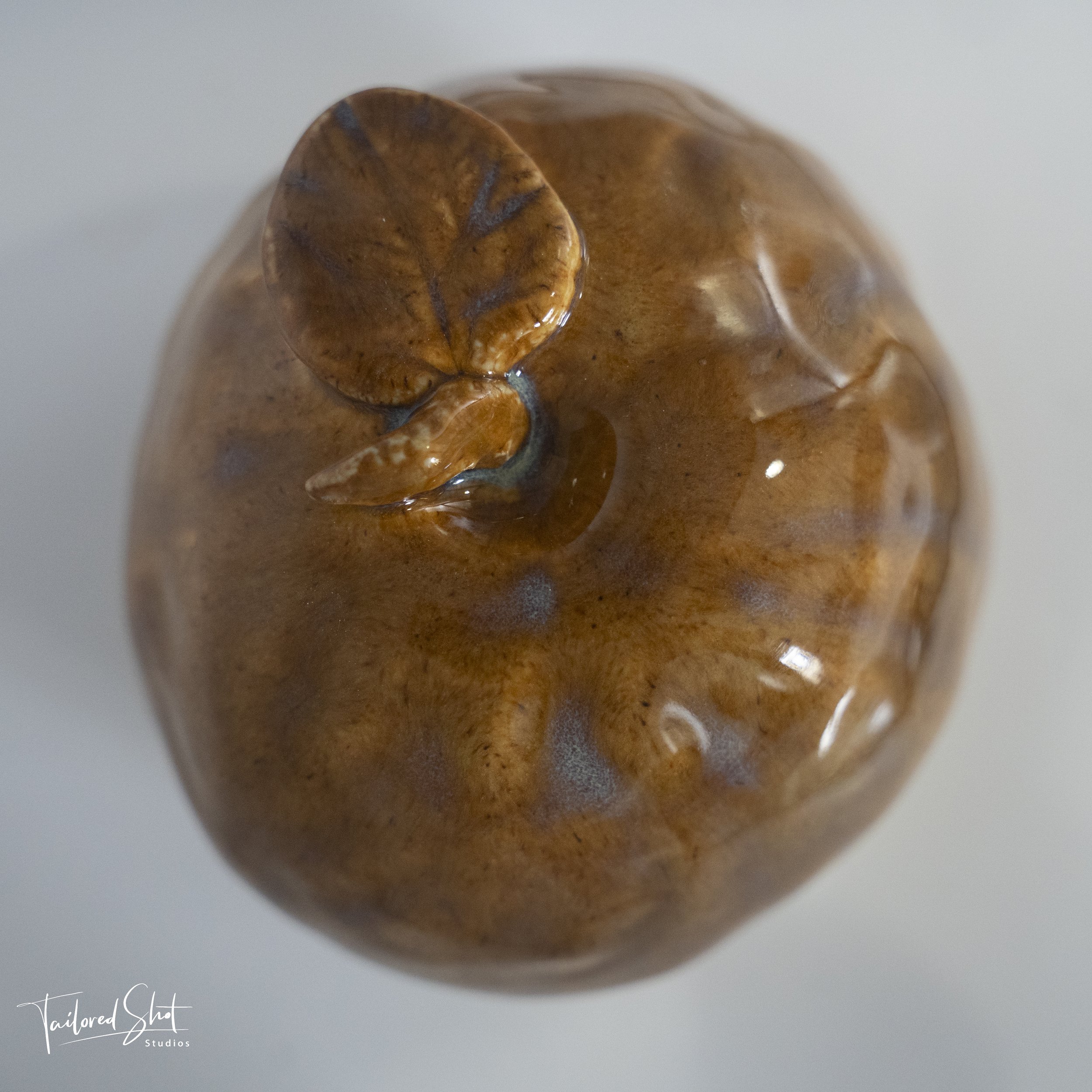
In "Honeyed Apple," the classic symbol of health and restriction is fundamentally transformed. For generations, the adage “An apple a day keeps the doctor away" has been weaponized by diet culture, turning a simple fruit into a clinical mandate for perfection, restraint, and body policing. This sculpture radically rejects that rigid moral assignment.
Rather than presenting an ideal representation of a ceramic apple, the piece is covered in a heavy, visceral, and unapologetically indulgent gold and blue glaze. A thick, viscous "honey" glaze cascades down the form, breaking into unpredictable golds and deep, bruised blues before pooling above a white glaze base. The glossy, dripping glaze celebrates the messiness of true nourishment and pleasure over the sterile promises of wellness trends.